Blog

The Most Catastrophic Nuclear Incident in U.S. History

When you envision nuclear disasters, you likely think of Chernobyl and Fukushima, yet the most catastrophic nuclear incident in American history actually took place in the hills near Los Angeles during the summer of 1959. An experimental operation led to a meltdown at the nuclear reactors of the Santa Susana Field Laboratory, releasing radiation levels estimated to be up to 300 times higher than those seen in the infamous Three Mile Island incident. Sixty years later, the environmental and political repercussions of the Santa Susana catastrophe still affect the region.

The Santa Susana Field Laboratory (SSFL), previously known as Rocketdyne, stands as a symbol of the innovation that characterized America’s post-war era. Even following the 1959 disaster, the facility remained operational until 2006. In spite of these continued operations, efforts to clean up have been drastically insufficient. Environmental advocates highlight the field’s pollution as a significant illustration of the government’s failure to safeguard communities. However, the field’s new corporate owners have largely dismissed these concerns as exaggerated, aiming to convert the former nuclear site into a nature reserve. Activists contend that this approach primarily alleviates the company’s cleanup responsibilities due to reduced decontamination requirements, thereby maintaining the site’s toxic contaminants instead of eliminating them.

The disaster serves as a pivotal example of the challenges facing the burgeoning nuclear energy sector in the U.S. With secretive military research, overt cover-ups, and a cleanup process mired in bureaucratic stagnation, this narrative resembles that of a film script. In fact, the incident inspired an award-winning documentary, “In the Dark of the Valley.” Sixty years post-meltdown, Santa Susana raises essential questions about government transparency, corporate accountability, and environmental protection regulations, especially as the United States continues to investigate the viability of next-generation nuclear energy.

The Santa Susana meltdown was a monumental calamity

On Monday, July 13, 1959, workers in the notorious Area IV section of the SSFL observed that the reactor was experiencing dangerously high temperatures. Alarmed by the possibility of an uncontrolled reaction, the scientists implemented drastic cooling measures, driving the reactor’s control rods into the core and releasing radioactive gas to reduce the risk of an explosion. After the temperatures decreased, the team revived the reactor, unaware that it was still in the midst of a mini-meltdown. Lacking modern containment systems, plant scientists mixed the fission products with outside air before filtering them through a ventilation system, ultimately emitting an estimated 130–13,000 curies of iodine-131 and 260–2,600 curies of cesium-137 into the atmosphere. For comparison, Three Mile Island only discharged 17 curies of iodine-131, rendering Santa Susana potentially one of the most contaminated nuclear sites in the country. Importantly, the wide range of these estimates highlights the uncertainty experts still face regarding the accident’s magnitude and consequences.

Surprisingly, news of the catastrophe did not reach the public until two decades later, when UCLA student Michael Rose uncovered the Atomic Energy Commission’s records and subsequent cover-up of the incident. Over the next fifty years, at least three more incidents occurred across its ten nuclear reactors. The lab also released contaminants through its hot lab, a disposal site where the nation’s nuclear fuel and reactor components were dismantled. Similarly, advocates later found that the lab’s plutonium fuel fabrication facility unlawfully burned contaminated reactor parts in open pits, releasing pollutants into the encroaching local community. The tens of thousands of rocket tests conducted at the lab led to millions of gallons of toxic chemicals infiltrating the site’s soil and water, which were then carried into nearby communities by stormwater runoff, wind, and various other environmental factors.

Tackling contamination at Santa Susana

Scientists are divided on the extent to which the site’s toxins have adversely affected local populations. For example, a 1997 UCLA study indicated that SSFL workers showed significantly higher rates of radiation-related cancers and mortality but was quickly challenged eight years later by a Boeing-funded research project which found no meaningful correlation. However, two years later, researchers at the University of Michigan identified a 60% rise in specific cancers within two miles of the lab, while investigators at USC’s Keck School of Medicine found no quantifiable evidence supporting this claim in 2014.

To address possible contamination, California’s EPA reached agreements with NASA and the Department of Energy to clean up the facility by 2017. Boeing, which currently owns the site, opted not to sign a similar pact, and the state’s deadline lapsed without any decontamination initiatives commencing. A year later, a nearly 100,000-acre wildfire ignited at the lab site, unearthing toxic waste in the field’s soil and enveloping surrounding communities in radioactive smoke, spreading contamination up to nine miles away. Meanwhile, advocates have criticized the public authority responsible for ensuring the site’s owners are accountable for cleanup, California’s Department of Toxic Substance Control, for allowing much of the site’s hazardous chemicals to remain.

In 2022, CalEPA enacted stricter cleanup protocols

Read More

Gemini Unveils Capability to Detect Videos Created by Google AI

Upload a video to Gemini and quickly discover if it was generated by AI with Google technology.

Key points to note:
– Google is integrating a SynthID watermark checker into the Gemini app specifically for videos.
– This feature can indicate whether a video was created or altered using Google AI.
– The update comes after the introduction of the SynthID watermark validation feature for images in the Gemini app last month.

Over time, distinguishing AI-generated content from genuine photos and videos will become increasingly challenging, highlighting the significance of watermarking and digital metadata. Determining if a video is authentic or AI-produced can be difficult. While there are various online tools that attempt to identify AI-generated content, Google is developing an “imperceptible” watermark technology known as SynthID to aid users in discerning authenticity.

Starting now, Gemini is capable of verifying video authenticity using SynthID within the Gemini app. This video verification tool can identify if submitted content was either created or altered with Google AI in any capacity. Google claims that more than 20 billion pieces of AI-generated content have been marked with SynthID, which digitally watermarks Google AI creations from Veo generations to AI edits in Google Photos.

To utilize the feature, upload a video to the Gemini app and pose a question such as “was this created using Google AI?” Following this, Gemini will analyze the video and provide feedback, including details on which parts of the content (if any) were generated or modified by AI.

Gemini might reply with something similar to “SynthID detected within the audio between 10-20 seconds. No SynthID detected in the visuals,” as noted in Google’s blog post.

The video verification feature does come with certain limitations. For identification via the Gemini app, a video must not exceed 100MB in size and should be 90 seconds or shorter in duration. Moreover, this functionality is limited to spotting videos generated with Google AI tools that utilize the SynthID watermark — it will not disclose information about content created with third-party software.

The new feature in the Gemini app builds on the SynthID photo verification that was launched in November.

“SynthID integrates an invisible digital watermark into an AI-generated image (or video segment),” Google states on the DeepMind website. “The watermark does not alter the quality of the image or video. It is incorporated at the moment of content creation and is designed to endure modifications such as cropping, adding filters, altering frame rates, or lossy compression.”

Now, users of Gemini can effortlessly and quickly verify the authenticity of photos and videos within the Gemini app wherever it is accessible.

Read More
Save 18% on This Legendary Kindle E-Reader and Get It by Christmas with Today’s Purchase

The standard Amazon Kindle serves as a reliable e-reader—particularly for below $90.

If you’re in the market for an affordable e-reader this winter, you’re fortunate with Amazon’s current Kindle promotion. At this moment, consumers can enjoy 18% off the Amazon Kindle, reducing the retail price of the entry-level e-reader to just $90.

The 2024 version of the device stands out as the top entry-level Kindle available, providing an economical price alongside a user-friendly display, ample storage for most casual readers, and a compact design that enhances comfort compared to earlier models. It also boasts impressive battery life and is constructed from 75% recycled plastics and 90% recycled magnesium.

This specific offer applies to both the Black and Matcha color options that the device is available in. It’s important to mention that this price pertains to the ad-supported version with a lockscreen, although you can pay slightly more to opt out of those ads. Buyers can also choose to bundle the device with 3 months of Kindle Unlimited, which grants access to over 4 million titles.

✅Recommended if: you prefer a tablet with an attractive, easy-on-the-eyes display and a device that is approximately 6 inches; battery longevity is a key factor for your e-reading needs; you desire a device equipped with Bluetooth and compatibility with platforms like Audible.

❌Skip this deal if: you require an e-reader that incorporates water resistance; you would rather upgrade to the Paperwhite model and have the funds to do so; you want a Kindle compatible with a stylus for note-taking, annotations, and more.

The base model of the Amazon Kindle is an excellent choice for nearly anyone interested in entering the world of e-readers, particularly due to its compact size, up to 6 weeks of battery life, and its enhanced 6-inch display.

When compared to the 2022 Amazon Kindle, the retailer claims the 2024 model is 25% brighter at its maximum setting, featuring a screen brightness comparable to the upgraded Paperwhite. Additionally, it provides improved performance for a smoother and faster page-turn experience, along with other upgraded display features such as adjustable front warm light. The 6-inch screen offers a 300ppi resolution and 16-level gray scale for a clear, high-contrast interface.

It also comes with a USB-C port for charging, Bluetooth compatibility, integration with reading applications like Audible, and an overall excellent design that remains comfortable to hold, even during extended reading sessions.

One of the most notable drawbacks of the base-level Kindle is its absence of a water resistance rating, although it’s still a strong choice at this price point if that feature isn’t a dealbreaker for you.

Read More
Current Offers: iPad at $274, $250 Discount on 24GB M5 MacBook, Apple Pencil Pro, Magic Mouse, and Additional Items

### Current Apple Product Offers: AirPods Pro 3, iPad 11, MacBook Pro, and More

As the festive season nears, leading retailers are unleashing considerable markdowns on sought-after Apple products. Here’s a summary of the freshest deals that both tech aficionados and casual users should take into account.

#### AirPods Pro 3 at Historic Low Price

Amazon has once again reduced the price of the **AirPods Pro 3** to **$199**, reflecting a $50 reduction from its standard price of $249. This offer is particularly enticing as it matches the historic low price previously encountered during Black Friday. Shoppers can anticipate delivery before Christmas in most regions, making it a timely gifting option.

#### Best Buy’s iPad 11 Deal

Best Buy is presently providing the **current-generation iPad 11** for **$274**, reverting to its Black Friday pricing. This base model includes 128GB of storage and comes in silver, blue, and pink. The iPad typically sells for $349, resulting in a significant discount. While it may not suit power users, it performs well for casual browsing, streaming, and day-to-day activities.

#### Apple Watch Ultra 2 Price Cuts

The **Apple Watch Ultra 2** is experiencing a price reduction of **$250** across different configurations, with the black model featuring a Black Titanium Milanese Loop now accessible for **$649**. This model generally sells for $899, making it an appealing choice for those seeking a premium smartwatch at a lower cost.

#### MacBook Pro Discounts

For those looking to acquire a new laptop, B&H is providing a **24GB M5 MacBook Pro** at a **$250 discount**, lowering the price to **$1,549**. This configuration includes a 512GB SSD and is a fantastic deal compared to Amazon’s prices for equivalent models. The entry-level 16GB/1TB version is also up for grabs on Amazon for **$1,349**, but this B&H offer features a more robust setup at a competitive price.

#### M4 MacBook Air Models Discounted

Amazon has reinstated a **$250 discount** on all **M4 MacBook Air** models, encompassing both 13-inch and 15-inch versions. This promotion mirrors the Black Friday pricing and is available in multiple colors. As inventory levels vary, this is a timely chance for anyone looking to buy a new MacBook Air.

### Conclusion

With these ongoing promotions, now is an ideal moment to contemplate upgrading your Apple devices or acquiring gifts for friends and family. From the AirPods Pro 3 to the latest iPad and MacBook models, these reductions offer significant savings on top-tier technology. Be sure to respond swiftly, as these deals might not be available for long.

Read More
Five Budget-Friendly Raspberry Pi Projects

The increasing expense of smart devices, subscription services, and smart home technology has prompted individuals to seek budget-friendly, adaptable options. This is precisely where Raspberry Pi excels. This compact, low-cost computer can perform functions usually carried out by expensive commercial equipment or recurring third-party services. With the appropriate software, you can transform a Raspberry Pi into a smart home hub, personal cloud storage, or a cost-free home security system. There are numerous ways to enhance your bedroom with Raspberry Pi projects and then extend those improvements throughout your home.

The attraction is clear: you have ownership of the data, hardware, and total control over it. And you obtain all of that without expensive ongoing fees. A Raspberry Pi can store all your data at no expense whatsoever. Additionally, many commercial monitoring systems and smart devices restrict crucial features behind subscriptions. With a Raspberry Pi, you can centralize control independently and evade long-term expenses associated with closed platforms. So let’s explore some Raspberry Pi project concepts that can help you save money!

**Smart Home Hub**

Transforming your Raspberry Pi into a smart home hub is not just a functional endeavor, but it can also lead to significant savings. You won’t have to spend on pricey proprietary hubs or continuous subscription charges. A Raspberry Pi can enhance your smart home by utilizing open-source software like Home Assistant. It will connect and manage lights, sensors, plugs, thermostats, and more. Commercial smart home hubs and ecosystems typically require hundreds of dollars upfront and often come with a monthly subscription fee. By choosing this DIY Raspberry Pi project, your principal expense is just the hardware, as the main software is free.

To configure your Raspberry Pi smart home hub, begin by installing Home Assistant’s image on a microSD card or an SSD. Then, follow the setup instructions to integrate smart devices into your network. Home Assistant can automatically detect many smart devices if they are Wi-Fi compatible. If not, you can enhance compatibility using Zigbee or Z-Wave USB adapters. But the savings don’t stop there. Did you know that establishing a smart hub can also minimize energy waste? This configuration allows your systems to operate only when necessary, leading to reduced energy expenses.

**Free Pi-hole Network Ad Blocker**

If you’re looking to enhance your internet experience with a cost-free ad blocker, consider converting your Raspberry Pi into a Pi-hole network ad blocker. Pi-hole is complimentary, open-source software that serves as a network-wide DNS sinkhole. It will block ads and trackers for every device linked to your home network. The best part? You won’t have to subscribe to any cloud service or individual ad-block application. Once you set up Pi-hole on your Pi and router, there are no recurring fees. This is far superior to a subscription-based DNS service, which frequently incurs extra charges for advanced features. Moreover, you don’t even need the latest hardware; you can reutilize an older Raspberry Pi for this project and save some funds.

Begin by installing the Pi-hole software on your Raspberry Pi and configuring the router to direct all DNS requests from connected devices (phones, computers, smart TVs, and gaming consoles) to the Pi. Once operational, Pi-hole will intercept DNS requests and block those that align with known ad-serving and tracking domains. This means ads won’t be downloaded in the first place. Consequently, the webpages you wish to access will load faster, and your network will consume less bandwidth. This way, you can also minimize data usage on capped connections and save money.

**Rain and Flood Detection**

Preventing water damage before it escalates is crucial. The potential costs of replacing furniture and appliances or repairing house construction following a flood are daunting. Average water damage claims can exceed $10,000 or more. Installing sensors to detect moisture or rising water levels early is among the wisest decisions a homeowner can make. You can also install motion sensors throughout your home while undertaking this project. Transforming your Raspberry Pi into a rain and flood detection system is not only economical but also simple.

Connect a basic water or rain sensor to the Raspberry Pi’s GPIO pins and write a brief Python script to monitor them. You don’t need to be a programmer to achieve this. Numerous scripts are readily available online (e.g., GitHub), even at no cost. When a sensor identifies hazardous water levels, whether it’s a leak or rainwater accumulating where it shouldn’t, the Raspberry Pi will alert you via email, text, or smart home dashboard. You can even blend this into your smart home system so that the water valve or sump pump activates automatically.

**Cloud Storage**

If you want to have complete control over your data without subscribing to services such as Google Drive, iCloud, or Dropbox, you could convert your Raspberry Pi into cloud-like storage. Yes, services typically

Read More
NotebookLM Transforms Source Material into Tables Ready for Google Sheets

**Google AI Pro and Ultra Subscribers Access New Data Tables Feature in NotebookLM**

Google has proclaimed the launch of a fresh feature termed Data Tables for its AI-driven tool, NotebookLM. This feature is now accessible for Google AI Pro and Ultra subscribers, with availability for free accounts anticipated to follow shortly.

**Essential Information:**
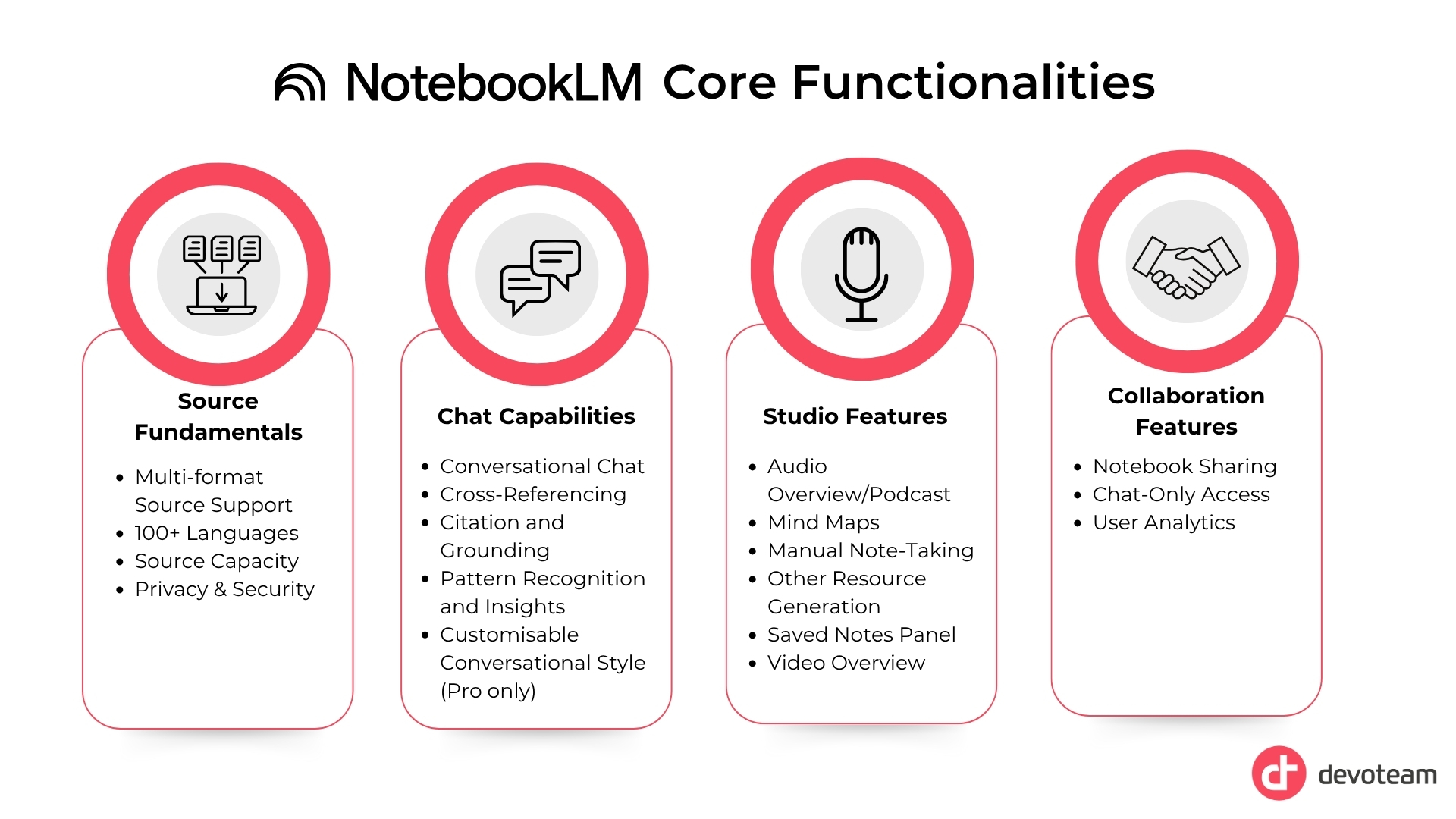
– **Data Tables Feature:** The new Data Tables feature in NotebookLM organizes crucial data points from multiple sources into formatted tables. These tables can be effortlessly exported to Google Sheets for enhanced data management.
– **Intended Users:** The feature is tailored for students, knowledge professionals, scientific researchers, and everyday consumers, providing an efficient method to manage and visualize data.
– **Application Scenarios:** Google proposes various uses for Data Tables, including converting meeting transcripts into action item tables, synthesizing clinical trial results, creating study tables for exams, and organizing vacation plans with comparison tables.

**Functionality:**
NotebookLM enables users to upload source materials such as videos, websites, or PDFs. The AI subsequently processes this information to produce neat, structured tables, alleviating the manual effort of data extraction for users.

**Latest Enhancements:**
Google has been upgrading NotebookLM with functionalities like Gemini integration and chat history. The introduction of Data Tables represents another advancement in enhancing the tool’s efficiency for data organization and project management.

**Launch Timeline:**
The Data Tables feature is being made available for Google AI Pro and Ultra users beginning today, with free users expected to receive the update in the near future.

Read More
Android 16 QPR3 Beta 1 Improves Essential Features on Pixel Devices

Android 16 QPR3 Beta 1 illustrates that Google continues to address the minor details.

What you should know

– Android 16 QPR3 Beta 1 has arrived just a few weeks after QPR2, likely indicating the final adjustments before Android 17.
– You can now disable the “At a Glance” widget to free up space on your home screen.
– The Quick Settings tile now incorporates a slider to manage beam intensity rather than just a basic on/off toggle.
– A new feature allows you to rearrange the back and recent buttons in the three-button navigation bar.

Just a short time after the launch of Android 16 QPR2 to the stable channel, Google has introduced Android 16 QPR3 Beta 1. This update is likely the last quarterly platform update prior to Android 17, and while it doesn’t introduce significant alterations, it aims to enhance everyday usability for Pixel users.

Quarterly Platform Releases, or QPRs, enable Google to enhance Android between major updates. Rather than waiting for an annual upgrade, these updates provide small enhancements, new functionalities, and background fixes.

Android 16 QPR3 Beta 1 is now accessible for Pixel devices from the Pixel 6 up to the latest models via the Android Beta Program. The stable version is anticipated to launch around March 2026.

At first glance, this beta emphasizes usability modifications that Pixel users have requested. One of the most prominent updates is in flashlight management. Instead of a straightforward on/off toggle, you now receive adjustable brightness, allowing you to modify the intensity based on your needs.

The main feature is the option to eliminate the At a Glance widget from your home screen. In this beta, a new “Show on home screen” choice is available in the widget’s settings. Turn it off, and the widget vanishes, giving you additional space to organize apps, add widgets, or simply enjoy your wallpaper.

Navigation has become more adaptable, as Google allows users to change the order of the traditional three-button navigation keys. This will feel recognizable to anyone familiar with Samsung devices.

Track which app is using your location

Privacy and transparency enhancements are also present. Android 16 QPR3 Beta 1 introduces an expandable location indicator in the status bar, enabling you to easily identify which app is accessing your location. A tap provides more information, rather than just displaying a generic symbol.

The update additionally brings support for over 160 new emojis from Unicode 17.0, subtly modernizing the platform.

Of course, this remains beta software. Bugs, battery issues, and performance inconsistencies are expected, and choosing to participate means you’re committed until the stable release arrives, unless you are okay with resetting your device.

Read More
Details of TikTok Transaction Surface with Pact to Establish U.S. Joint Venture

Axios, The Associated Press, and Reuters. TikTok’s CEO Shou Zi Chew mentioned in the memo that the transaction is expected to finalize on January 22. Reports indicate that Oracle, Silver Lake, and MGX are three significant investors in the TikTok U.S. venture (TikTok USDS Joint Venture LLC), collectively owning a 45% stake (15% each). ByteDance is set to retain a 19.9% interest in the newly formed entity, while nearly 30.1% will be allocated to current ByteDance investors. The identities of the remaining investors remain uncertain.

TikTok U.S. will feature a board of directors consisting of seven members, six of whom will be American. ByteDance will occupy the remaining seat. The new entity will store U.S. user data on servers operated by Oracle. The algorithm driving the new application will be re-trained using U.S. user data to “guarantee that the content feed is free from external influence.” TikTok U.S. will also take charge of content moderation on the platform.

While TikTok U.S. manages user data, the new algorithm, content moderation, and software security, revenue collection will still be under ByteDance’s purview. A segment of that revenue will be distributed to the U.S. venture, although specific numbers have not been disclosed. Additionally, the amount Oracle, Silver Lake, and MGX are investing for their shares of TikTok U.S. is still unknown. The new enterprise is projected to be valued at approximately $14 billion, based on figures cited by Vice President JD Vance in September.

What the TikTok sale signifies for users

<div class="slide-key image-holder gallery-image-holder credit-image-wrap " data-post-url="https://www.bgr.com/2056122/tiktok-sale-details-us-joint-venture-deal/" data-post

Read More
How to Resolve Apple CarPlay Problems Following iOS 26 Update

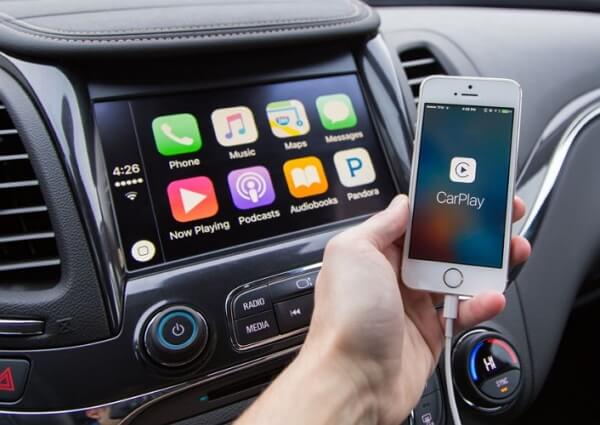
Refrain from turning your iPhone off and on again, as this likely won’t restore Apple CarPlay if it’s become disconnected, particularly if this problem arose after the main iOS 26 update, which many users experienced. TikTok user Charly gained popularity this week by sharing a public service announcement concerning unforeseen CarPlay connectivity issues and potential resolutions. Regrettably, users cannot rectify the bug that hinders a wireless connection, but they can utilize a USB-C cable equipped for data transfer to connect their iPhone to the vehicle and regain CarPlay functionality.

“If your iPhone’s CarPlay has ceased functioning after the latest update, you require a data cable,” Charly stated in a now-viral video, as other iPhone users faced similar dilemmas. She informed Motor1 that she arrived at the solution through “a lot of trial and error.” After discovering online that others were encountering identical issues, she theorized that the problem stemmed from data transfers and attempted to link her iPhone to the car using a data cable.

You might already possess a data cable compatible with CarPlay. Charly’s test was fruitful. She restored the CarPlay connection utilizing a data cable, which is simply a USB-C cable that also transfers data. The TikToker mentioned that she tried every USB-C cable in her possession, but none were effective until she connected a data cable. Other iPhone users experiencing the wireless connectivity issue might find themselves in a similar situation. Since not all charging cables can transfer data, CarPlay will not function if you use a charging cable to connect your iPhone to the car, as it won’t transmit the necessary data to your vehicle’s infotainment system.

If you still have the original USB-C cable that came with your iPhone, you are fortunate to already have a data cable. If your iPhone is from the 11 to 14 series, the original Lightning to USB-C cable included also facilitates data transfer.

You have likely acquired additional USB-C cables if your iPhone isn’t brand-new, thus arbitrarily selecting one does not guarantee CarPlay functionality. While you can test each cable individually, it’s more efficient to look for markings indicating data transfer support (such as transfer speeds). If those markings are absent, you might check if the iPhone initiates a data transfer with your computer when connecting the two devices. If none of these options work, consider purchasing a third-party data cable from an electronics retailer and keep it in your car for emergency CarPlay connectivity.

There are other solutions that might restore your CarPlay connection. CarPlay is meant to “just work,” as Apple often claims when discussing new products and features. The iPhone should automatically and wirelessly connect to your car. It remains uncertain which of the recent iOS 26 updates triggered the CarPlay connectivity issues. Apple launched the new main build in mid-September and subsequently released two smaller updates, iOS 26.1 featuring new additions and iOS 26.2 with further enhancements and adjustments. The beta version of iOS 26.3 is already available for installation. Charly does not specify which software version she’s using. If iOS 26 is the latest update installed, upgrading to iOS 26.2 may resolve the problem. This is also something to consider before opting for the wired CarPlay alternative.

If your vehicle only has USB-C ports and your iPhone has a Lightning port, you will require a USB-C to Lightning adapter, such as the one Apple offers for $29. This particular accessory facilitates both data and power transfer, making it suitable for CarPlay. Apple notes in a support document that “certain combinations of adapters, cables, and vehicle entertainment systems might interfere with the wired CarPlay connection.” Apple recommends USB-A to USB-C cables for such instances. If your vehicle only accepts USB-A cables, an adapter that supports data transfer will be necessary.

Read More